
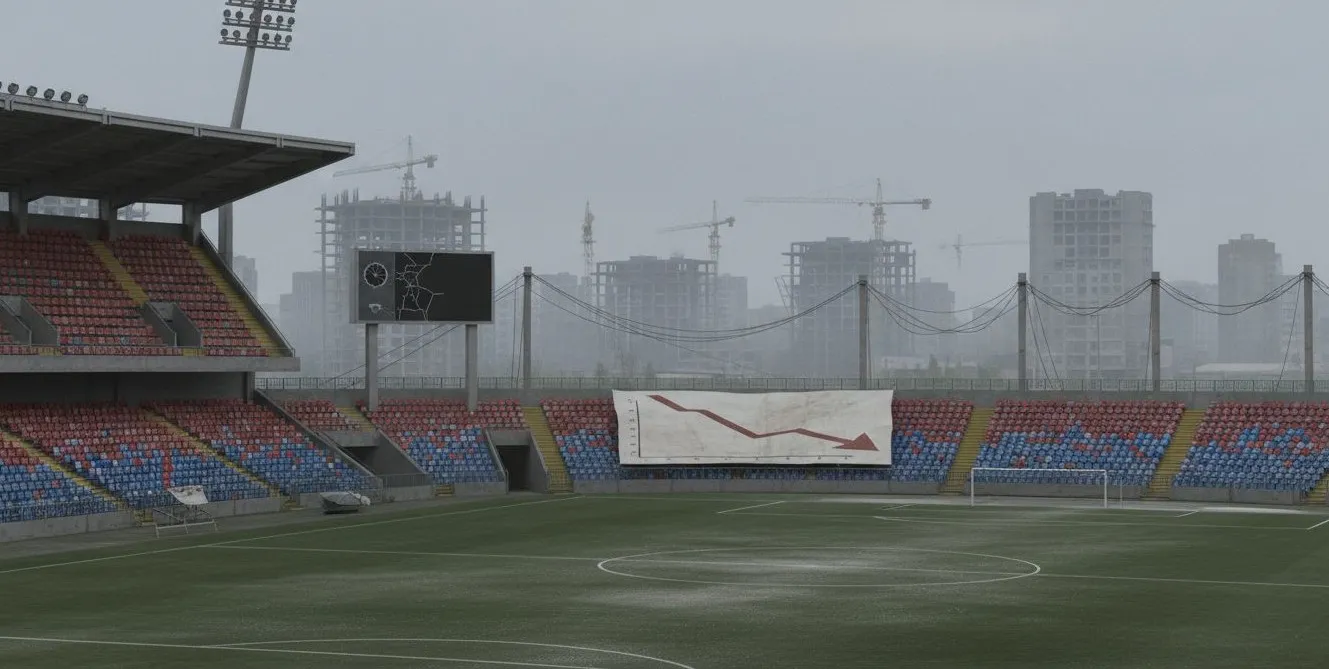
Why Home Advantage Is Declining in Some Leagues
For decades, home advantage was one of the most reliable concepts in football analysis. Teams playing on their own ground consistently won more matches, scored more goals, and earned more points. Coaches planned seasons around home fixtures, fans viewed away games with caution, and analysts treated home advantage as a near-constant factor in predictions.
In recent years, however, this assumption has started to weaken in several leagues. Statistical trends show that the gap between home and away performance is shrinking, and in some competitions it has narrowed dramatically. Home advantage has not disappeared entirely, but its influence is clearly declining in certain contexts. Understanding why this is happening requires looking beyond a single cause and examining how modern football has changed.
What home advantage traditionally meant
Historically, home advantage was built on several reinforcing factors. Familiar surroundings, supportive crowds, reduced travel fatigue, and subtle officiating bias all contributed to better home performance. These elements combined to create a tangible edge that teams could rely on over the course of a season.
In many leagues during the late twentieth and early twenty-first centuries, home teams earned significantly more points than away teams. This pattern was so stable that it became embedded in tactical planning, betting models, and even fixture analysis.
However, football does not exist in a vacuum. As the sport professionalized and globalized, the conditions that once amplified home advantage began to change.
Improved travel and recovery reducing fatigue
One of the most important factors behind declining home advantage is the evolution of travel and sports science. Modern teams travel in far more controlled and comfortable conditions than in the past. Charter flights, optimized schedules, recovery protocols, and nutrition planning reduce the physical toll of away matches.
For elite teams, travel fatigue has become a minor issue rather than a defining obstacle. Players arrive rested, prepared, and accustomed to unfamiliar environments. As a result, the physical edge once enjoyed by home teams has diminished.
This effect is especially noticeable in leagues where clubs frequently compete in international tournaments and are accustomed to constant travel.
Standardization of stadiums and facilities
Another subtle but significant change is the increasing uniformity of football infrastructure. Modern stadiums are designed to similar standards, with comparable pitch dimensions, lighting, turf quality, and dressing room facilities.
In the past, visiting teams often faced unfamiliar or uncomfortable conditions. Today, most top-level stadiums offer near-identical environments. Training grounds, warm-up routines, and matchday logistics are standardized, reducing the psychological and practical advantages of playing at home.
When away players feel physically and mentally comfortable, the traditional sense of “hostile territory” weakens.
Tactical sophistication and game preparation
Modern football is far more tactical and data-driven than it was even a decade ago. Teams prepare extensively for each opponent, regardless of venue. Video analysis, opponent-specific drills, and detailed scouting reports allow players to anticipate patterns and adjust quickly.
Away teams now arrive with clear tactical plans designed to neutralize home pressure. Compact defensive structures, controlled possession phases, and situational pressing are used deliberately to manage matches away from home.
As tactical discipline improves across leagues, emotional momentum generated by home crowds has less impact on match outcomes.
The changing role of fans and atmosphere
Crowd support has always been central to home advantage. However, its influence is not static. In some leagues, attendance patterns have shifted due to pricing, broadcasting schedules, or demographic changes.
Additionally, players today grow up in high-pressure environments from a young age. Many debut in front of large crowds, play internationally early in their careers, and regularly perform in hostile stadiums. As a result, crowd noise is less intimidating and easier to tune out.
The period of matches played behind closed doors during the COVID-19 pandemic also provided a unique natural experiment. In several leagues, the absence of fans coincided with a measurable drop in home advantage, and in some cases that reduction persisted even after supporters returned.
Refereeing and reduced subconscious bias
Studies have long suggested that referees, often unconsciously, favored home teams in close decisions. Crowd pressure, stadium atmosphere, and emotional cues influenced fouls, cards, and added time.
With the introduction of VAR and increased scrutiny, officiating has become more standardized. Decisions are reviewed centrally, and referees are less influenced by immediate crowd reactions. This technological intervention has reduced one of the subtle mechanisms through which home advantage operated.
While VAR has its critics, its presence has undeniably changed the decision-making environment, particularly in high-profile leagues.
Leagues where home advantage has declined most
The decline of home advantage is not uniform across all competitions. Some leagues still show strong home performance, while others have experienced noticeable convergence between home and away results.
Leagues where the decline is often discussed include:
- top-tier European leagues with high tactical parity,
- competitions with frequent international travel,
- leagues with heavy VAR usage and standardized officiating.
In contrast, lower divisions or leagues with significant infrastructure disparities often retain stronger home advantage.
Factors contributing to declining home advantage
| Factor | Impact on Home Advantage |
|---|---|
| Improved travel | Reduces away fatigue |
| Stadium standardization | Lowers environmental differences |
| Tactical preparation | Neutralizes emotional pressure |
| VAR implementation | Limits refereeing bias |
| Player experience | Increases mental resilience |
This table highlights how multiple small changes combine to weaken what was once a powerful advantage.
Increased parity between teams
Another key reason for declining home advantage is competitive balance. Financial regulation, scouting globalization, and youth development have narrowed the gap between teams in many leagues.
When away teams are tactically organized and technically comparable, home advantage alone is often insufficient to secure results. Matches become more even, and outcomes depend more on execution than location.
This trend is especially evident in leagues where mid-table teams are capable of taking points from top clubs regardless of venue.
Psychological adaptation of players
Modern players are trained to treat every match as a professional task rather than an emotional event. Sports psychology emphasizes routine, focus, and emotional control. Away matches are framed as challenges, not threats.
This mindset shift reduces anxiety and improves performance consistency. When players approach away games with confidence rather than caution, the traditional psychological edge of home teams diminishes.
Does home advantage still exist?
Despite its decline in some leagues, home advantage has not vanished. It remains relevant in specific contexts, such as:
- derby matches with intense local rivalry,
- leagues with extreme travel distances,
- stadiums known for unique atmospheres,
- lower divisions with uneven facilities.
However, it is no longer a universal constant. Analysts, coaches, and bettors increasingly treat home advantage as situational rather than automatic.
Implications for analysis and predictions
The declining influence of home advantage has important implications. Relying on home status alone is no longer sufficient for evaluating matches. Context, form, tactics, and squad availability matter more than ever.
For analysts, this shift demands more nuanced models. For fans, it explains why away wins feel more common. For teams, it reinforces the importance of preparation regardless of venue.
Conclusion
Home advantage is declining in some leagues not because football has lost its passion, but because the sport has evolved. Better travel, standardized environments, tactical sophistication, and technological oversight have gradually eroded the factors that once made home matches uniquely advantageous.
While playing at home still matters, it no longer guarantees superiority. In modern football, preparation, adaptability, and execution increasingly outweigh location. Understanding this shift helps explain changing league dynamics and reminds us that even football’s most enduring assumptions are subject to change.