
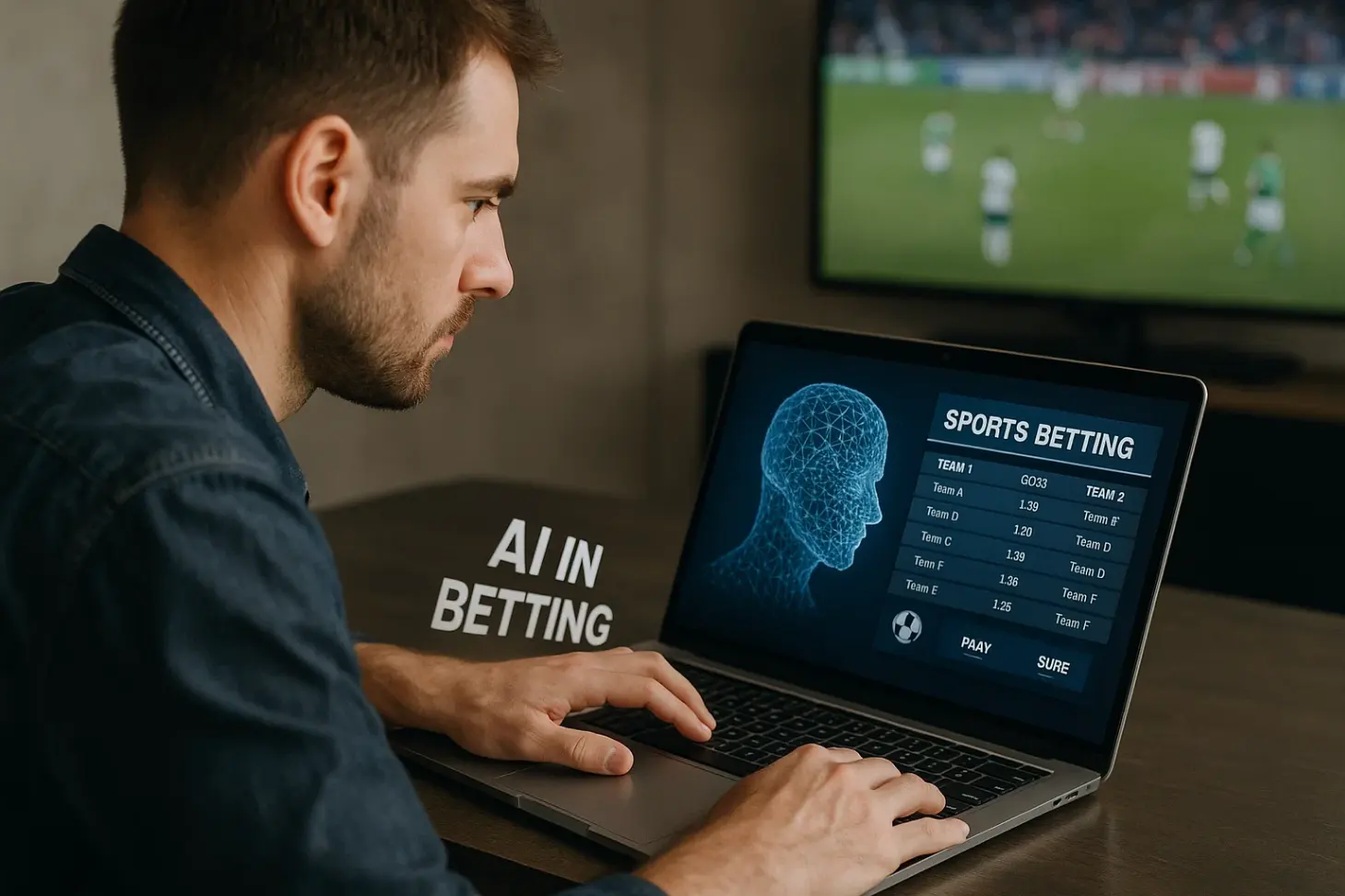
AI in Betting 2026: How Neural Networks Predict Sports Outcomes
Artificial intelligence is transforming sports betting faster than any other technological wave of the past decade. By 2026, neural network–driven prediction engines have become a core tool for analysts, bettors, and sportsbooks, reshaping how probabilities are calculated and how odds are generated.
This article explores how AI models interpret performance data, identify hidden patterns, and deliver real-time predictions with increasing accuracy. It also examines the practical use cases, limitations, and future developments that define AI-powered betting today.
The Evolution of AI-Driven Betting Models
Neural networks in 2026 no longer rely on simple historical statistics. Instead, they process huge volumes of dynamic inputs—from real-time athlete tracking data to biometric indicators and weather patterns. This evolution marks a shift from static, pre-match forecasting to adaptive models that continuously update. Modern architectures such as Transformers and hybrid deep-learning ensembles allow systems to learn contextual relationships between thousands of variables. As a result, predictions become more granular and scenario-specific, enabling bettors to evaluate the probability of various match states, not just final outcomes.
How Deep Learning Enhances Predictive Power
Deep learning models excel at capturing nonlinear relationships that traditional statistical methods often miss. For example, a forward’s reduced sprint speed in the last five games may correlate with a lower scoring probability when combined with specific defensive pressures. Neural networks detect such layered interactions automatically. Furthermore, reinforcement learning engines simulate millions of match variations to estimate optimal betting decisions. By rewarding correct predictive paths, these models continuously refine their internal logic, improving accuracy with every dataset they ingest.
Data Pipelines That Fuel AI Predictions in 2026
AI systems rely heavily on the quality and volume of data they process. In 2026, sportsbooks and analytics firms integrate multiple data streams in real time: sensor-based athlete tracking, live tactical mapping, match momentum graphs, officiating trends, social sentiment shifts, and fatigue projections. These inputs must be cleaned, normalized, and fed into deep-learning pipelines capable of handling both structured and unstructured data. Large language models also analyze news feeds, injury reports, and insider commentary to augment the numerical features with contextual insights.
Why Data Diversity Matters for Predictive Models
When neural networks learn from diverse data sources, they reduce overfitting and enhance contextual understanding. For example, a sudden tactical rotation may be missed in numerical datasets but captured in live textual commentary. Combining both signals allows AI to adjust expectations quickly. This is particularly important for in-play betting, where markets change every few seconds. Models that fuse multimodal inputs deliver the most stable forecasts even in volatile match conditions.
Practical Applications of AI Predictions for Bettors
AI in sports betting is not only used by large sportsbooks but increasingly by individual bettors who leverage dashboards, automated alerts, and simulation platforms. These systems present probabilities in intuitive visual formats, allowing users to compare predicted outcomes with offered odds. The technology helps detect value bets, highlight market inefficiencies, and forecast alternative scenarios such as total goals, player milestones, or momentum swings.
Before illustrating specific use cases, it is helpful to frame the key tasks where AI excels.
Below is the single and only list included in this article, presenting the most common AI-powered functions in modern betting platforms:
- Real-time probability recalculation based on live match events.
- Automatic detection of overpriced or underpriced odds.
- Prediction of player-specific metrics such as assists, shots, or passing accuracy.
- Simulation of thousands of hypothetical match developments.
- Assessment of risk levels for complex accumulator bets.
Each of these tasks expands bettor awareness, but none guarantees success. AI should complement strategy, not replace it. Bettors must still evaluate model reliability, adapt to unexpected conditions, and understand when human intuition may outperform automated systems.
Case Studies: Real Examples of AI Predictions in Action
Real-world applications demonstrate how neural networks shape decision-making. For instance, in European football, AI models predicted an underdog’s high pressing efficiency against a traditionally possession-dominant team. The system flagged unexpectedly high upset probability due to tactical mismatches detected in positional data. Another example comes from basketball micro-markets, where AI identified a player’s likely decline in three-point accuracy after analyzing subtle mechanical differences captured in motion sensors. In tennis, reinforcement learning engines have begun predicting momentum shifts following service-speed reductions or elongated rallies, helping bettors anticipate live-market swings.
Accuracy, Limitations, and Ethical Concerns in 2026
Despite their sophistication, AI systems are not infallible. Errors stem from incomplete datasets, sudden injuries, officiating anomalies, or unpredictable human behavior. Betting outcomes always include randomness; even the best model cannot eliminate variance. Transparency is another ongoing challenge: many commercial platforms do not reveal how their algorithms weigh variables, leaving bettors uncertain about potential biases. Ethical concerns include unequal access to advanced tools, the possibility of AI-generated market distortions, and the need for responsible gambling frameworks that account for increased predictive precision.
Understanding the Metrics Behind Model Performance
To evaluate prediction reliability, analysts use metrics such as Brier scores, calibration curves, precision-recall ratios, and expected value estimations. Still, no metric alone fully captures model quality. Context—league type, season phase, matchup style—matters greatly. As AI grows more complex, explainability tools such as feature-importance mapping and SHAP value visualizations have become essential for understanding why a model made a particular prediction.
The Future of Neural Networks in Betting
By 2026, the trajectory of AI in betting points toward hyper-personalization. Systems will adapt predictions based not just on match data but also on user behavior, historical preferences, and risk profiles. Integration of edge-AI chips will process data locally for faster in-play forecasting. Virtual simulations will become more lifelike, enabling bettors to explore plausible match worlds generated entirely by neural models. Regulatory bodies are also beginning to establish clearer guidelines for algorithm transparency to maintain integrity across betting markets.
Key Differences Between Traditional and AI-Based Prediction Approaches
Before presenting the comparison below, it is important to understand that this table highlights conceptual distinctions rather than strict category separations. After the table, a short explanation clarifies what these differences mean for bettors.
| Prediction Approach | Data Usage | Adaptability | Accuracy Potential | Ideal Use Case |
|---|---|---|---|---|
| Traditional Statistical Models | Limited historical stats | Low | Moderate | Pre-match baseline forecasting |
| Neural Network Models | Large multimodal datasets | High | High | Live and scenario-based predictions |
| Reinforcement Learning Engines | Simulation-driven | Very High | High | Strategy optimization and complex markets |
These differences illustrate how AI reshapes betting from a statistically anchored discipline into a dynamic, data-rich forecasting environment. For bettors, understanding these distinctions helps clarify when each method is most appropriate and how AI outputs should be interpreted alongside traditional analytics.
Conclusion
Neural networks have fundamentally transformed sports betting strategies by 2026, offering deeper insights, faster updates, and increasingly accurate scenario modeling. Yet AI is not a crystal ball. Success comes from integrating model predictions with human judgment, sport-specific knowledge, and responsible decision-making. As data ecosystems grow and predictive engines evolve, bettors and sportsbooks alike will benefit from a more informed, transparent, and strategic betting landscape.